As Amazon Associates, we earn from qualifying purchases. This means we may receive a small commission at no extra cost to you if you click through and make a purchase.
Removing finished prints from a stubborn build platform often leads to scratched glass surfaces, broken models, and knocked-out bed alignment. For 3D printer operators using the Creality CR-6 SE, replacing the stock carborundum glass platform with the KOYOFEI CR-6 SE PEI Bed addresses these persistent workflow challenges directly. Makers, creators, and hobbyists who depend on their machine for functional parts, mechanical prototypes, or detailed decorative prints regularly experience the dual frustrations of first-layer corner warping and aggressive adhesion that resists gentle removal. This aftermarket plate eliminates the need for razor spatulas and brute force by introducing a flexible, magnetic platform engineered to streamline the entire post-print extraction routine.
Our verdict is that this creality cr-6 se print bed upgrade provides meaningful practical value by combining reliable heat-activated grip with effortless, tool-free mechanical part separation. While glass surfaces on older machines like the early creality ender 3 generations demand cooling wait times and careful blade work, this spring steel build surface allows models to snap free with a slight bend of the sheet. For users committed to keeping their equipment running smoothly while safeguarding fragile print geometry, this two-part accessory kit delivers a substantial mechanical improvement without requiring custom firmware or hardware modification.
Quick Verdict
The KOYOFEI CR-6 SE PEI Bed replaces the rigid stock glass platform with a flexible magnetic build surface that solves stubborn part adhesion, stops edge warping, and speeds up fabrication cycles.
- Gold frosted polyetherimide coating produces dependable cr-6 se first layer adhesion during heating and releases prints smoothly upon cooling.
- Dual-layer architecture combines a high-grab adhesive soft magnetic base sticker with a resilient koyofei cr-6 se pei spring steel plate.
- Engineered to the precise 255 x 245 x 2 mm footprint of the Creality CR-6 SE heated platform.
- Renders scraping tools obsolete, protecting the print surface and preserving automatic strain-gauge bed leveling settings.
KOYOFEI CR-6 SE PEI Bed Features Explained
Gold Frosted PEI Coating and First Layer Grip
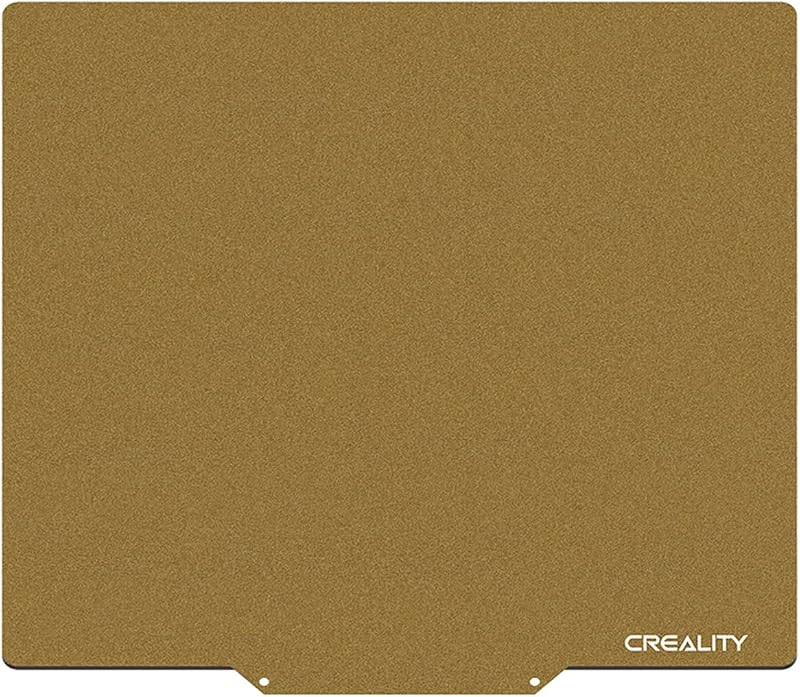
The primary working surface of this creality cr-6 se pei bed consists of a gold-toned polyetherimide (PEI) coating with a finely frosted, textured finish. In additive manufacturing, PEI is widely recognized for its high-temperature stability, flame retardance, abrasion resistance, and mechanical strength. When applied as a frosted texture, it creates microscopic surface contours that allow molten thermoplastic to establish an intimate mechanical anchor. This high surface traction prevents edge curling and layer detachment on filaments like PLA, PETG, and TPU, eliminating the need for messy auxiliary adhesives such as gluestick, blue painter tape, or hairspray.
The thermal behavior of this creality cr-6 se pei sheet simplifies daily operation by working in tandem with the heated build plate. While heated during an active print job, the molecular properties of the PEI coating hold the first layer firmly in place to resist warping forces caused by plastic cooling. Once the print cycle completes and the platform returns to room temperature, the differential thermal contraction between the printed model and the steel plate loosens the bond. Parts can often be lifted off by hand without bending, or detached completely with an effortless flex of the plate.
Two-in-One Dual Component Construction
The KOYOFEI CR-6 SE PEI Bed is designed as a complete two-in-one platform conversion kit. It comprises two essential layers: a high-tack soft magnetic bottom sheet and the gold frosted PEI spring steel plate itself. The magnetic base adheres directly to the printer’s aluminum heatbed using its integrated peel-and-stick adhesive backing, establishing a permanent magnetic foundation across the build area. The upper spring steel sheet attaches firmly on top of this base, utilizing strong magnetic attraction to ensure the plate remains immovably seated during high-speed directional changes of the print bed.
This dual-layer system modernizes older bed architectures, bringing the CR-6 SE in line with newer printers like the ender 3 v3 ke that utilize spring steel platforms out of the box. Because the spring steel layer is entirely removable, users never need to exert mechanical leverage or downward pressure against the printer’s linear guide rails while prying off a part. Removing prints simply involves lifting the plate from its magnetic seat, gently flexing the spring steel outward, and watching the completed model pop free without structural damage.
Thermal Resistance and Demagnetization Prevention
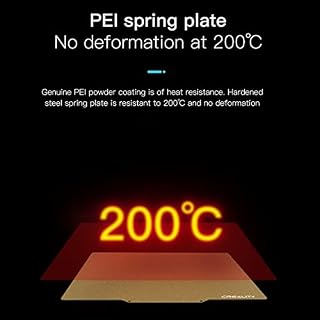
A frequent vulnerability in aftermarket magnetic build systems is thermal degradation of the magnetic sheet over repeated heat cycles. The KOYOFEI system addresses this concern by utilizing a PC-formulated soft magnet material engineered with flame retardance, wear resistance, oxidation resistance, and minimal forming shrinkage. Crucially, the soft magnet structure is rated for sustained heat resistance without demagnetization, ensuring that prolonged thermal exposure from the heated aluminum bed does not weaken the magnetic hold over months of heavy printing.
Consistent magnetic clamping force is vital for bed-slinger 3D printers, where the Y-axis carriage accelerates back and forth rapidly during print execution. If a magnetic sheet loses field strength due to elevated temperatures, the spring steel plate could shift during rapid infill printing, resulting in catastrophic layer shifts. The thermal resilience of this cr-6 se magnetic flexible bed base guarantees that the steel plate remains flat, stationary, and planar throughout extensive print runs across standard hobbyist temperature ranges.
Custom CR-6 SE Dimensions and Surface Protection
The KOYOFEI CR-6 SE PEI Bed is manufactured specifically for the Creality CR-6 SE, featuring exact physical dimensions of 255 x 245 x 2 mm. Unlike generic build surfaces that require manual trimming or overhang awkward corners, this creality cr-6 se build plate matches the operational dimensions of the CR-6 SE heatbed precisely. At 2 mm total thickness, the assembly maintains excellent thermal conductivity from the heating element through the magnetic base and into the PEI surface, ensuring rapid and uniform thermal distribution without cold spots along the perimeter.
To preserve the integrity of the textured coating and maintain accurate creality cr-6 se specs, the manufacturer highlights critical care protocols: users must never scrape the surface with sharp metal spatulas, putty knives, or razor blades. Because the frosted PEI layer is a precision coating applied over spring steel, sharp steel edges can gouge the texture, scrape away the PEI film, and compromise adhesion. Regular cleaning requires only a gentle wipe with isopropyl alcohol to dissolve oils left by human hands, protecting the plate for long-term functional use.
Specs
| Attribute | Detail |
|---|---|
| Product Name | KOYOFEI CR-6 SE PEI Bed |
| Manufacturer | KOYOFEI |
| Compatible Printer Model | Creality CR-6 SE |
| Platform Dimensions | 255 x 245 x 2 mm |
| Package Dimensions | 11.54 x 10.87 x 1.77 inches |
| Total Item Weight | 1.65 pounds |
| Print Surface Coating | Gold frosted polyetherimide (PEI) |
| Platform Construction | Removable flexible spring steel sheet |
| Base Attachment Type | Adhesive-backed PC soft magnetic sheet |
| Package Contents | 1x PEI spring steel plate, 1x soft magnetic sticker |
Figures quoted from the product listing. Nothing here was measured.
KOYOFEI CR-6 SE PEI Bed Pros and Cons
Pros
- Frosted PEI coating promotes reliable first layer adhesion
- Flexible spring steel sheet enables tool-free print removal
- PC soft magnetic sticker resists heat and demagnetization
- Exact 255 x 245 mm sizing for CR-6 SE
- Two-piece kit includes magnetic sticker and steel plate
Cons
- Frosted PEI coating damaged easily by sharp scrapers
- Listing does not specify maximum operating temperature
- Requires permanent adhesive installation on bare heatbed
Best Use Cases
- Fabricating delicate, thin-walled models and miniature structures that would snap or shatter if pried from a rigid glass surface with a scraper.
- Executing rapid prototyping runs where instant, tool-free part removal drastically shortens workshop turn-around time between sequential print jobs.
- Printing broad-surface technical components and structural brackets prone to bottom-layer warping without relying on chemical adhesion aids.
- Upgrading older machines so that the creality cr-6 se for 3d printing hobbyists delivers modern ergonomic part extraction.
Before You Buy
Before installing the KOYOFEI CR-6 SE PEI Bed, users must assess their printer’s physical bed preparation and alignment geometry. Installing the magnetic base requires removing the original carborundum glass sheet and securing clips, followed by thoroughly cleaning the bare aluminum heatbed with isopropyl alcohol to remove all adhesive residues and dust. Any trapped debris beneath the self-adhesive magnetic sheet can create high spots that compromise first-layer consistency. Furthermore, because this 255 x 245 x 2 mm sheet differs in height and surface texture compared to standard factory platforms on printers like the ender 3 v3, operators must perform a full auto-leveling calibration routine on their CR-6 SE before starting a print.
Prospective buyers should also take note of what the product package includes and what the listing does not specify. The kit contains solely the single frosted PEI spring steel plate and the single soft magnetic adhesive sticker; it does not come with cleaning solvents, isopropyl alcohol wipes, replacement nozzle tips, or leveling tools. Additionally, the manufacturer listing does not specify a precise maximum continuous operating temperature in Celsius, nor does it specify whether the magnetic sheet is compatible with third-party textured sheets of differing dimensions. Users planning to run sustained ultra-high-temperature engineering filaments should be mindful of these unspecified operational boundaries.
Bottom Line
When asking is creality cr-6 se worth it to maintain and modernize, upgrading the build platform is one of the most cost-effective performance enhancements available. The KOYOFEI CR-6 SE PEI Bed resolves the primary ergonomic flaw of the original CR-6 SE design—namely, stubborn part adhesion on an unyielding glass surface that risks damaging models and disturbing the printhead strain gauge. By shifting to a magnetic spring steel format, users achieve predictable first-layer grip alongside effortless print extraction.
With its robust polyetherimide coating, flame-retardant magnetic foundation, and exact physical compatibility with the 255 x 245 mm build area, this accessory eliminates the need for scraping blades and chemical adhesives. For makers seeking to streamline their 3D printing workflow, minimize ruined prints, and protect their machine’s mechanical calibration, this PEI platform represents a practical, high-value workshop upgrade.
FAQ
Does the KOYOFEI PEI bed interfere with the Creality CR-6 SE auto bed leveling system?
The Creality CR-6 SE utilizes a nozzle-based strain gauge sensor rather than an inductive or optical proximity probe, meaning it levels by detecting direct physical nozzle contact against the build surface. Because the KOYOFEI spring steel plate sits flat and rigid atop the magnetic base across the 255 x 245 mm area, the strain gauge functions without interference. However, because the total platform thickness changes, users must re-run the 16-point automatic bed leveling mesh and re-check their Z-offset calibration immediately after installation.
How do you safely clean and maintain the frosted PEI coating?
Routine maintenance requires wiping the frosted PEI surface with a clean microfiber towel soaked in 90% or higher isopropyl alcohol before printing to eliminate finger oils, grease, and dust. For stubborn residue, washing the cooled steel plate with warm water and mild dish soap effectively restores tack. Operators must strictly avoid metal spatulas, razor blades, abrasive sponges, or acetone, as harsh scrapers and solvents will permanently strip or degrade the frosted PEI coating.
Can you print PETG and TPU directly on this frosted PEI surface?
Yes, the textured frosted PEI coating accommodates materials like PETG and TPU effectively, but caution is necessary with PETG due to its tendency to bond aggressively to smooth surfaces. The microscopic peaks and valleys of the frosted texture help prevent excessive bonding compared to smooth PEI, allowing the material to release once cooled. To avoid surface tear-out with exceptionally sticky filaments, users should always ensure the plate cools completely to ambient room temperature before flexing.
Will the magnetic base lose its holding strength under heated bed temperatures?
The magnetic sheet included in this kit is formulated from PC soft magnet material engineered specifically to resist thermal demagnetization, oxidation, and material shrinkage under standard 3D printing thermal cycles. While the product listing does not specify a maximum continuous temperature ceiling, it is built to endure the typical 50 to 80 degree Celsius temperatures required for PLA, PETG, and similar filament types without weakening magnetic retention.
Can this build plate be used on other Creality 3D printers?
This KOYOFEI plate is dimensioned specifically at 255 x 245 x 2 mm to match the unique build volume of the Creality CR-6 SE. Most standard Creality machines, including popular Ender series models, feature square 235 x 235 mm heatbeds, making this rectangular plate too large to seat properly. Operators should measure their machine’s bare aluminum bed dimensions prior to ordering to ensure proper physical compatibility.