As Amazon Associates, we earn from qualifying purchases. This means we may receive a small commission at no extra cost to you if you click through and make a purchase.

Desk fabrication tools frequently demand substantial maintenance and calibration time before delivering reliable prototypes. For creators, vloggers, and hobbyists, early-generation bedslinger machines often introduced friction through Bowden tube slippage, uneven manual bed levelling, and single-lead-screw gantry droop that ruined hours of work. The ELEGOO Neptune 3 Pro addresses these common fabrication headaches by pairing an integrated direct-drive filament feeder with multi-point automated bed calibration and synchronized mechanical towers.
By shifting critical hardware upgrades into an accessible out-of-the-box format, this machine targets creators who prioritize rapid prototyping over mechanical troubleshooting. While it maintains a standard desktop footprint, the combination of silent electronics, dual-motor stability, and reinforced thermal components delivers an efficient workflow for functional modeling, camera mount printing, and personalized workshop utility.
Quick Verdict
The ELEGOO Neptune 3 Pro stands out as an exceptionally reliable entry-to-intermediate desktop manufacturing platform. It replaces common hobbyist frustrations with automated assistance and rigid kinematic construction, allowing makers to focus on design iteration rather than hardware debugging.
- Integrated dual-gear direct drive system offers precise material feeding across rigid and flexible filaments.
- Contact-free 36-point automated surface leveling establishes consistent first-layer squish without tedious manual card-sliding.
- Independent dual Z-axis motors with synchronized lead screws eliminate gantry tilt and layer banding artifacts.
- Quiet STM32 control board keeps stepper motor movement noise beneath 47dB for shared workspaces.
ELEGOO Neptune 3 Pro Features Explained
Dual-Gear Direct Drive Extrusion
Extruder reliability defines whether a 3D printer becomes a helpful production asset or a source of constant maintenance. The elegoo neptune 3 pro direct drive extruder utilizes dual drive gears fabricated from SUS303 stainless steel, driven by a dedicated 3:1 gear reduction system. By placing the drive mechanism immediately above the hotend assembly rather than across a long Bowden tube, the extruder exerts immediate and direct control over filament advancement and retraction distances.
This compact mechanical layout makes neptune 3 pro tpu printing significantly more dependable than on legacy Bowden platforms. Flexible materials often buckle or bind inside lengthy guide tubes, but the constrained filament path on this direct-drive carriage feeds soft elastomers evenly. Beyond flexible filaments, the 3:1 mechanical advantage delivers consistent bite on rigid spools of PLA, PETG, and ABS, minimizing the chance of ground filament flakes and mid-print extrusion starvation.
36-Point Automated Bed Calibration
Securing a flat, uniform first layer remains the most critical phase of any FDM print job. The neptune 3 pro auto bed leveling system replaces traditional four-corner manual thumbwheel guesswork with a non-contact sensor that measures the aluminum build platform across a dense 36-point matrix. During this calibration routine, the sensor detects physical surface variations and establishes a high-resolution software height map.
When executing a print, the motherboard uses this 36-point mesh to dynamically adjust the dual Z-axis motors in tiny increments as the toolhead traverses the build plane. Minor dips or high spots across the heated platform are compensated for automatically, ensuring optimal first-layer squish across the full build surface. This automated approach drastically lowers failed prints caused by adhesion loss or localized nozzle dragging.
Dual Z-Axis Motion System
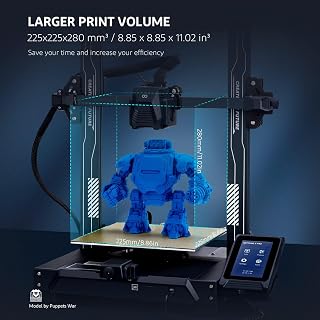
Cantilevered or single-motor vertical motion systems frequently suffer from gantry sag on the unsupported side, leading to uneven layer lines and skewed geometry. To counter this mechanical weakness, the neptune 3 pro dual z axis design implements dual lead screws driven by two separate stepper motors. Both sides of the horizontal crossbeam lift in absolute lockstep, stabilizing the entire carriage across tall prints up to 280 millimeters.
Motion stability is further enhanced by durable POM V-guide wheels tracking along the rigid aluminum vertical extrusions. By distributing mechanical loads across dual drive points and low-wear guide wheels, the system isolates the print carriage from unwanted vibration and frame flex. This steady gantry movement translates directly into refined neptune 3 pro print quality, showing fewer surface ripples and cleaner vertical walls on functional assemblies.
Thermal Dissipation and Nozzle Architecture
Heat creep inside the print head causes stubborn blockages that bring long print jobs to an abrupt halt. The hotend assembly on this machine incorporates a specialized titanium alloy throat tube paired with a wide aluminum heat sink. Titanium possesses significantly lower thermal conductivity than conventional stainless steel or brass, creating a crisp thermal transition zone between the cold heat sink and the melting chamber.
A front-mounted high-flow cooling fan directs dedicated airflow over the widened radiator fins, sweeping excess heat away before it can soften filament inside the upper carriage. Downstream, the standard brass nozzle provides rapid thermal transfer to melt filament evenly during high-speed moves. This balanced thermal arrangement ensures continuous extrusion integrity during multi-day prints using temperature-sensitive materials like PETG or ABS.
Silent STM32 Mainboard and Recovery Features
Workshop noise can quickly become disruptive in small home studios or creator workspaces. ELEGOO builds this unit around an STM32 32-bit control motherboard outfitted with silent stepper motor drivers, capping operational mechanical noise at or below 47dB. The machine hums quietly during complex multidirectional movements, permitting makers to record audio or work alongside the active printer without acoustic interference.
To safeguard multi-hour fabrication runs, the printer incorporates automated contingency sensors. A physical filament runout switch pauses execution immediately if the spool empties or snaps, giving you time to reload material before continuing the print. Complementing this is an onboard power-loss resume routine that saves positional coordinates to internal memory, allowing the hotend to re-engage smoothly after unexpected electrical drops.
Specs
Reviewing the core neptune 3 pro specs helps makers verify workshop clearances, structural build materials, and overall mechanical capabilities before integrating the machine into their workspace.
| Attribute | Detail |
|---|---|
| Manufacturer | ELEGOO |
| Item Model Number | Neptune 3 pro |
| Build Volume | 225 x 225 x 280 mm (8.85 x 8.85 x 11 inches) |
| Overall Dimensions | 23 inches Deep x 9 inches Wide x 19 inches High |
| Item Weight | 22 pounds |
| Frame Construction | Aluminum |
| Extruder Style | Dual-gear direct drive with 3:1 ratio |
| Z-Axis Configuration | Dual lead screws with dual independent motors |
| Acoustic Level | As low as 47dB |
| Color | Black |
Figures quoted from the product listing. Nothing here was measured.
ELEGOO Neptune 3 Pro Pros and Cons
Pros
- Dual-gear direct drive extruder
- 36-point auto bed leveling
- Dual Z-axis lead screws with dual motors
- Quiet STM32 board under 47dB
- Pre-assembled quick setup
- Titanium throat tube clog prevention
Cons
- Standard build volume limits oversized models
- Open frame requires enclosure for ABS drafts
- Listing does not specify max nozzle temperature
Best Use Cases
- Fabricating customized camera rigging, brackets, and cold-shoe adapters using durable PETG filament.
- Prototyping flexible handheld grips, cable strain reliefs, and vibration dampers using soft TPU spools.
- Creating detailed architectural models and tabletop terrain using standard PLA without layer banding artifacts.
- Printing functional replacement parts and storage organization systems for a busy creative studio.
- Running continuous, low-noise prototyping batches in home offices or shared creator workshops.
Before You Buy
Evaluating your studio footprint is crucial prior to delivery. With exterior measurements of 23 inches deep by 9 inches wide and 19 inches high, the machine requires extra clearance around the perimeter to accommodate the moving bed and the top-mounted spool holder. The listing emphasizes that the machine arrives pre-assembled and is ready to print in minutes, making the initial elegoo neptune 3 pro setup straightforward even for those unboxing their first fabrication tool. Makers running intensive multi-tool workspaces might organize their workstations alongside other heavy utility gear, such as the anker prime power bank 300w for field power or battery storage management.
While the hardware reliably processes PLA, TPU, PETG, and ABS, the open-frame aluminum construction does not include an enclosure. Printing ABS on larger geometries can lead to warping from ambient room drafts; the manufacturer listing does not specify whether an external enclosure or secondary draft shield is bundled. Additionally, while the silent stepper drivers keep operation below 47dB, maintaining a clean operating space free of fine filament debris is vital, just as studio creators rely on automated cleaning systems like the roborock – qrevo series robot vacuum & mop with multifunctional dock, 10,000pa suction, anti-tangle to maintain clean shop floors.
Bottom Line
When deciding whether the machine fits your fabrication pipeline, asking is neptune 3 pro worth it comes down to workflow convenience and mechanical reliability. By bundling dual Z-axis drive screws, a 36-point mesh sensor, and a robust dual-gear direct drive extruder into an aluminum chassis, ELEGOO removes the manual tuning hurdles that once plagued bedslinger 3D printers. The result is a smooth transition from CAD file to physical object, without requiring hours of pre-flight leveling.
The unit serves as an approachable gateway platform, proving that the neptune 3 pro for beginners offers sufficient technical depth to satisfy intermediate makers as well. While expansive industrial components will require larger platforms, this machine strikes a practical balance of vertical capacity, silent operation, and material versatility for day-to-day creative fabrication.
FAQ
Is the Neptune 3 Pro suitable for beginners?
The Neptune 3 Pro is very well suited for beginners because it arrives pre-assembled and takes only minutes to set up. Its automated 36-point bed leveling system removes the difficult card-sliding manual leveling process that causes most novice print failures, while the silent stepper drivers and simple direct-drive feeding make routine operation straightforward.
Can the ELEGOO Neptune 3 Pro print TPU and other flexible filaments?
Yes, the printer is well equipped for flexible filaments thanks to its dual-gear direct drive extruder. Built from SUS303 stainless steel with a 3:1 reduction ratio, the feeder grips flexible TPU firmly right above the hotend, preventing the binding, stretching, and coiling problems commonly experienced on Bowden-style printers.
How does the 36-point auto bed leveling work?
The printer uses a non-contact sensor on the toolhead to probe the aluminum print bed across a structured 36-point grid. It records any microscopic variations in surface elevation and builds an internal height map. During printing, the STM32 motherboard continuously adjusts the dual Z-axis motors to compensate for these variances, ensuring consistent first-layer adhesion.
What materials are supported by the hotend assembly?
The listing states that the extruder and nozzle system support PLA, TPU, PETG, and ABS. The combination of a titanium throat tube, brass nozzle, widened aluminum heat sink, and front cooling fan helps prevent clogs and manages heat dissipation across these standard hobbyist materials.
How loud is the ELEGOO Neptune 3 Pro during operation?
The printer operates with noise levels as low as 47dB. This quiet performance is achieved using an STM32 motherboard paired with silent stepper motor drivers, making it quiet enough to run in a home office, shared studio, or bedroom workspace without causing noticeable distraction.