As Amazon Associates, we earn from qualifying purchases. This means we may receive a small commission at no extra cost to you if you click through and make a purchase.
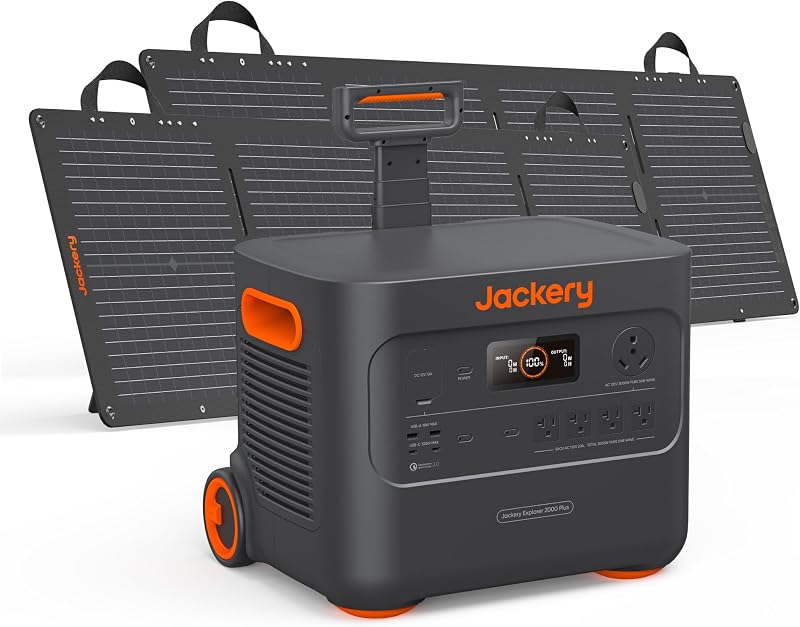
Remote video sets, field recording sessions, and outdoor creative workflows routinely present serious logistical power hurdles. Crews operating modern digital cinema cameras, continuous high-output LED fixtures, wireless video transmitters, and field editing workstations require steady, clean electrical current that standard portable power banks simply cannot deliver. Fuel-driven generators provide raw wattage but introduce severe audio interference, exhaust fumes, and safety hazards that render them unsuitable for closed sets, vehicle interiors, or quiet nature shoots. The Jackery Explorer 2000 Plus enters this demanding space as a dedicated high-capacity power station engineered to support heavy-draw production hardware far beyond the bounds of municipal power grids. Whether managing extended documentary shoots or powering off-grid live broadcasts, creators need a centralized power station capable of keeping an entire equipment package functioning seamlessly throughout grueling production days.
Our practical evaluation reveals an exceptionally capable workhorse built around modern electrical demands. Featuring an expansive 2,042.8Wh base storage capacity alongside a formidable 3000W continuous pure sine wave inverter, this unit eliminates the fear of tripping circuits when firing up powerful studio lights or running heavy workstation loads simultaneously. While an 82-pound chassis demands deliberate two-person handling or rolling transport, the addition of long-lasting lithium iron phosphate cell chemistry, two-hour wall recharging speeds, and massive modular expansion capabilities makes it a premier power foundation for serious creators seeking dependable location independence.
Quick Verdict
The Jackery Explorer 2000 Plus delivers the high-wattage throughput and deep battery reserves required by ambitious filmmakers, commercial photographers, and location crews. It replaces noisy gas equipment with clean, silent electrical delivery that handles multiple heavy-draw creative tools without thermal stutter or power degradation.
- Robust 3000W continuous output easily handles high-draw video lights, production carts, and power tools.
- Substantial 2,042.8Wh base capacity expands up to 24kWh for multi-day field endurance.
- Durable LiFePO4 battery architecture offers an estimated 10-year operational lifespan with ChargeShield protection.
- Ultra-fast dual charging fully replenishes the battery pack in roughly two hours via wall outlet or full solar array.
Jackery Explorer 2000 Plus Features Explained
High-Wattage Inverter for Rigorous Production Hardware
Modern commercial productions increasingly rely on powerful continuous lighting, motorized camera sliders, and high-performance video rendering laptops that quickly overwhelm lesser battery packs. Operating on an impressive output threshold, the Jackery 2000 Plus 3000W output delivers continuous alternating current with enough headroom to support demanding electrical equipment simultaneously. Creative directors can comfortably run heavy LED studio spotlights at full power while simultaneously operating battery charging banks for V-mount bricks, drones, and camera monitors without triggering overload safeties.
This stability is critical when evaluating the Jackery 2000 Plus for video production, where unexpected voltage fluctuations can corrupt camera media or cause light flicker during a live take. The integrated inverter maintains a steady 240V AC delivery across four designated power outlets, ensuring that delicate video hardware receives clean power without electrical noise. Crews who previously split devices across multiple small power packs can centralize their entire digital imaging technician station into a unified power core, significantly streamlining location footprint and cable management.
Long-Lasting LiFePO4 Chemistry and ChargeShield Protection
Battery longevity remains a vital metric for gear investments, and the shift to Jackery 2000 Plus LiFePO4 cell chemistry represents a massive technical leap over older lithium-ion compositions. Lithium iron phosphate cells are inherently more stable, resisting thermal runaway and exhibiting minimal capacity degradation even under aggressive, daily duty cycles. Jackery rates this unit for up to 10 years of regular use, providing working professionals with an extended operational lifespan that yields steady utility across hundreds of commercial shoots and travel assignments.
Safeguarding this internal cell bank is Jackery’s proprietary ChargeShield fast charging technology, an intelligent management algorithm that actively modulates voltage and current flow to extend battery life by up to 50%. The system incorporates a dedicated Smart Shallow Charging Mode, which optimizes charging efficiency to prevent cell stress during rapid turnaround times. Paired with high-temperature resistance and internal safety mechanisms against short circuits, the unit protects connected production hardware from power spikes, allowing creators to run expensive digital cinema rigs with complete confidence.
Scalable Battery Expansion for Multi-Day Production Shoots
One of the standout design characteristics of this power station is its flexible modularity. The base unit holds a generous 2,042.8Wh of power, but demanding sets often run around the clock without access to grid infrastructure. Through Jackery 2000 Plus battery expansion, operators can link up to five individual expansion battery packs directly to the primary station, scaling available capacity from 2kWh up to an enormous 12kWh. This modular approach allows video production teams to scale their battery reserves to match the exact scope of each shooting day.
For high-demand operations such as mobile video villages or remote live-streaming trailers, two complete units can be linked in parallel. This parallel integration unlocks an unprecedented 24kWh total capacity while doubling maximum output up to 6000W. While creators embarking on smaller, run-and-gun documentary shoots might prefer the lighter profile of an option like the jackery 1000 plus v2, having the technical capability to scale into a multi-day commercial hub makes this system extraordinarily versatile for growing production companies.
Ultra-Fast AC Wall and Solar Recharging Workflows
Downtime on a commercial set translates directly to lost shooting hours, making rapid replenishment just as important as storage capacity. The Explorer 2000 Plus supports rapid AC wall recharging that replenishes the internal 2,042.8Wh battery from zero to full capacity in approximately two hours. This ultra-fast cycle allows production assistants to completely top off the system during a lunch break or between production days at a hotel, ensuring the gear package is ready for early-morning shoot calls.
Off-grid creators who work far beyond grid infrastructure can take full advantage of Jackery 2000 Plus solar charging capabilities. By connecting up to six SolarSaga 200W solar panels, the system can achieve a full recharge from sunlight in approximately two hours under optimal ambient conditions. The retail package also includes two 100W mini solar panels, providing an immediate baseline solar setup for maintaining trickle charging or extending runtimes on moderately sunny days without hauling extra gear.
Thermal Efficiency and Harsh Environment Reliability
Location work often forces equipment to operate under harsh outdoor conditions, ranging from direct desert sunlight to humid coastal air. The Explorer 2000 Plus integrates an advanced cooling structure engineered to improve overall heat dissipation efficiency by 30%. By exhausting heat rapidly through optimized internal airflow paths, the power station prevents premature thermal throttling even when driving heavy loads in warm conditions.
This thermal resilience is essential when deploying the Jackery 2000 Plus for outdoor shoots where electrical gear must sit on baking asphalt, dirt staging areas, or inside production vans. Creators managing multi-camera setups in difficult environments will appreciate that internal components remain well within safe operating temperatures. Teams managing extensive location setups can even evaluate step-up units like the jackery 3000 plus when persistent multi-kilowatt cooling and power requirements expand further.
Specs
| Attribute | Detail |
|---|---|
| Model Name and Number | JE-2000C |
| Battery Capacity | 2,042.8 Wh |
| Battery Chemistry | LiFePO4 (Lithium Iron Phosphate) |
| Continuous AC Output Wattage | 3000 Watts |
| Output Voltage | 240 Volts AC |
| Current Rating | 3000 A |
| Total Power Outlets | 4 |
| Full Recharge Time (AC Wall or 6x 200W Solar) | Approximately 2 Hours |
| Product Dimensions | 19″L x 14.1″W x 14.7″H |
| Total Unit Weight | 82 Pounds |
Figures quoted from the product listing. Nothing here was measured.
Jackery Explorer 2000 Plus Pros and Cons
Pros
- High 3000W continuous AC output
- Long-lasting 10-year LiFePO4 battery lifespan
- Rapid two-hour AC wall recharging
- Expandable storage capacity up to 24kWh
- Includes two 100W mini solar panels
Cons
- Substantial weight at 82 pounds
- Limited to four total power outlets
- Large physical footprint on location
Best Use Cases
- Powering remote commercial video sets with heavy-draw continuous LED lights, camera monitors, and field audio equipment.
- Running mobile digital imaging technician (DIT) carts with high-end editing laptops, RAID storage arrays, and color-accurate grading displays.
- Providing quiet, emissions-free basecamp electrical power inside production vans, trailers, or remote staging tents during extended shoots.
- Supplying emergency home studio backup power to preserve sensitive computer hardware, external hard drives, and network servers during outages.
Before You Buy
Before integrating this power station into your production kit, careful attention must be paid to its physical size and weight profile. Weighing in at 82 pounds and measuring 19 by 14.1 by 14.7 inches, this is a substantial piece of hardware that cannot be easily hauled by a single person over rough terrain without a cart. Teams working out of small passenger vehicles or solo creators hiking into wilderness locations might find the footprint restrictive. Mobile vloggers and lightweight documentary creators may prefer a significantly more portable unit such as the jackery 300 plus for small mirrorless accessories, whereas heavy commercial studio facilities requiring massive stationary setups might evaluate substantial units like the jackery 5000 plus.
It is also critical to understand package inclusions and connectivity details. The bundle includes the internal batteries and two 100W mini solar panels, but the six SolarSaga 200W solar panels required to hit the rapid two-hour solar recharge benchmark must be acquired separately. The listing specifies four total power outlets and an operating voltage of 240V AC with a 3000A current rating, though it does not specify individual port breakouts such as exact counts for secondary USB-A or USB-C receptacles. Crews running numerous auxiliary accessories should plan on using verified power distribution strips or dedicated distribution boxes to route power efficiently across multiple cameras, monitors, and wireless receivers.
Bottom Line
Navigating the electrical realities of modern location production requires hardware that blends substantial reserve energy with uncompromised output stability. As demonstrated in this detailed Jackery Explorer 2000 Plus review, the station bridges the gap between small, underpowered battery banks and cumbersome, noisy fuel generators. By matching 2,042.8Wh of durable LiFePO4 storage with an impressive 3000W continuous pure sine wave inverter, it readily handles the demands of heavy continuous lighting, multi-bay charging carts, and remote post-production editing stations.
When deciding whether the unit fits your operational budget and production demands, consider the scope of your typical shoots. If your workflow requires high-output equipment, multi-device reliability, and rapid two-hour recharging in remote environments, the station delivers exceptional capability. For professional video creators and mobile production teams seeking to build a modular, future-proof power setup, this station represents a reliable, high-performance asset that keeps your critical production gear rolling when the cameras start turning.
FAQ
How fast does the Jackery Explorer 2000 Plus recharge from an AC wall outlet?
The unit features ultra-fast charging capabilities that allow it to reach a full recharge from a standard wall outlet in approximately two hours. This rapid replenishment capability minimizes downtime between back-to-back production days or during midday set breaks.
Can the system run multiple high-draw video lights on location?
Yes, the 3000W continuous output inverter is capable of supporting heavy production lighting fixtures, including high-output LED spotlights and studio strobes, provided their combined electrical demand remains within the 3000W threshold across its four AC outlets.
What are the primary benefits of LiFePO4 battery chemistry for creators?
LiFePO4 battery cells offer enhanced thermal stability, resistance to high temperatures, and an extended operational lifespan rated for up to 10 years of use. Unlike older lithium-ion compositions, LiFePO4 maintains its storage health across significantly more charge cycles under rigorous production use.
How does capacity expansion work on the Explorer 2000 Plus?
The system supports modular expansion by allowing you to connect up to five individual expansion battery packs, scaling storage from 2kWh up to 12kWh. Furthermore, two complete units can be linked in parallel to provide up to 24kWh of capacity and an expanded 6000W total output.
What solar panels are included with this specific listing?
According to the product listing, this power station package comes complete with two 100W mini solar panels to support portable solar replenishment, while larger arrays of up to six SolarSaga 200W panels can be connected to achieve a full recharge in roughly two hours.