As Amazon Associates, we earn from qualifying purchases. This means we may receive a small commission at no extra cost to you if you click through and make a purchase.
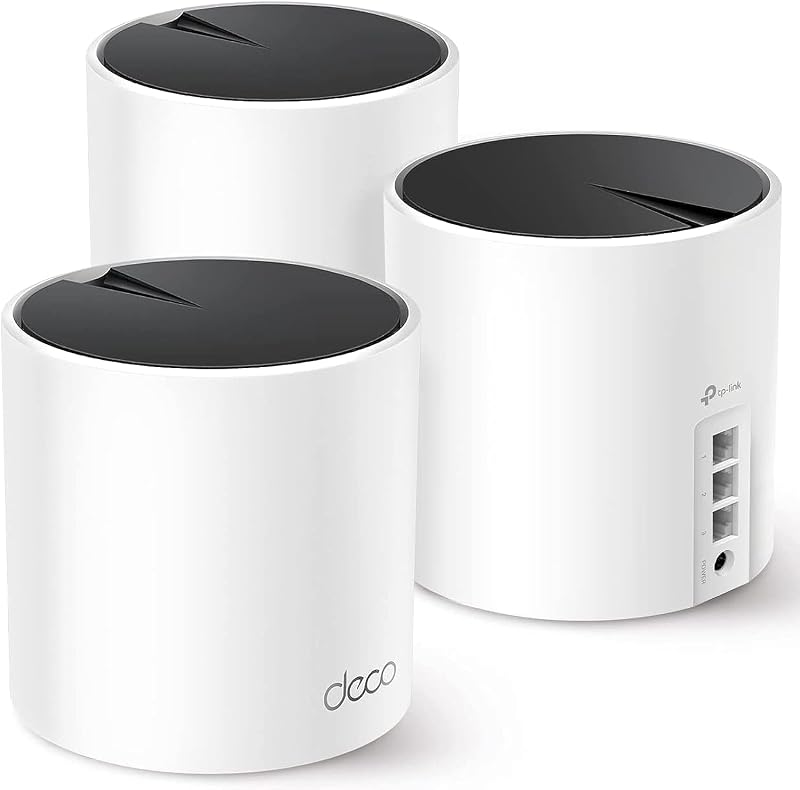
Content creators, livestreamers, and digital media hobbyists regularly encounter workflow bottlenecks caused by uneven wireless coverage, latency spikes, and congested local frequencies. When transferring multi-gigabyte camera B-roll archives, syncing project libraries with cloud backups, or operating studio peripherals alongside high-definition video monitors, a conventional standalone router often fails to maintain consistent throughput across adjacent rooms. The TP-Link Deco X55 is engineered specifically to eliminate dead zones and buffering delays by deploying a distributed network topology that provides seamless whole-facility connectivity.
Evaluating this network solution shows that it hits a practical sweet spot between reliable multi-device throughput and straightforward home management. By combining AX3000 Wi-Fi 6 wireless transmission with three dedicated physical gigabit connections on every module, it furnishes creative studios with dependable wireless agility and robust hardwired data channels.
Quick Verdict
The system serves as a dependable networking foundation for creative workspaces, home offices, and multi-room content studios that require stable local connectivity without enterprise complexity. With total aggregate speeds reaching 3000 Mbps across dual frequency bands, substantial wireless reach, and three physical gigabit network ports per unit, it effectively manages multi-device editing rigs, cloud transfers, and high-bitrate streaming sessions.
- Equipped with dual-band Wi-Fi 6 technology reaching theoretical limits of 2402 Mbps on 5 GHz and 574 Mbps on 2.4 GHz.
- Features three auto-sensing Gigabit Ethernet ports per unit to support stable wired Ethernet backhaul configurations and local direct connections.
- Provides up to 6,500 square feet of whole-home coverage and handles concurrent connections for up to 150 devices.
- Integrates basic TP-Link HomeShield network defense, parental filters, and Quality of Service management tools.
TP-Link Deco X55 Features Explained
Dual-Band Wi-Fi 6 Wireless Architecture
At the technical center of the system is a dual-band deco x55 wifi 6 mesh design engineered to handle modern high-bandwidth studio demands. The hardware operates a 2×2 antenna array on the 5 GHz band supporting 160 MHz channel bandwidth (HE160) for theoretical peak speeds up to 2402 Mbps, alongside a 2×2 array on the 2.4 GHz band providing up to 574 Mbps. This combined AX3000 transmission capacity allows video editors and media producers to execute cloud synchronization and media asset downloads simultaneously without dragging down overall local network responsiveness.
For creators assessing the deco x55 for streaming live video or broadcasting multi-angle podcast footage, the Wi-Fi 6 protocol integration mitigates signal collisions and packet drops typical of older wireless standards. The expanded 160 MHz channel width doubles channel capacity compared to conventional 80 MHz channels, offering the necessary wireless headroom to ingest continuous video feeds from remote studio cameras, audio interfaces, and digital control panels without unexpected latency.
Three Gigabit Ports and Dedicated Wired Ethernet Backhaul
A critical technical advantage for professional media workflows is the generous physical port array present on each satellite. Unlike basic mesh pods that supply only one or two network jacks, the deco x55 gigabit ports number three per node, offering an aggregate of nine ports across the three-pack system. In comparative discussions like deco x55 vs x20, this port expansion represents a major hardware evolution, giving workstation setups direct connectivity without immediately requiring external switching hardware.
Furthermore, the platform actively supports tp-link deco x55 ethernet backhaul deployment, allowing creators who have structured cabling in their home or office to link the pods using physical LAN lines. Operating an Ethernet backhaul eliminates wireless transmission overhead between mesh satellites, reserving the entire 5 GHz radio band strictly for client endpoints like laptops, tablets, and smartphones. Users planning larger installations can also explore our detailed deco x55 3-pack guide for additional architectural insights on multi-room hardware mapping.
Studio-Wide Coverage and Multi-Device Capacity
Eliminating wireless dead zones in spread-out creator workspaces is essential when moving between capture bays, voiceover booths, and editing suites. The deco x55 coverage extends across areas up to 6,500 square feet when deploying the full three-pack array, forming a unified network umbrella that replaces outdated traditional range extenders and signal repeaters. This extensive coverage allows remote capture equipment, smart stage lights, and cloud storage systems to remain linked under a single network identifier without requiring manual network switching as you traverse your workspace.
In addition to physical area coverage, the system handles concurrent connections for up to 150 connected devices without severe performance degradation. Modern creative studios are dense environments saturated with wireless accessories, rendering computers, mobile devices, security cameras, smart home hubs, and connected storage drives. The high client ceiling ensures that routine background IoT communication never chokes out high-priority creative asset uploads or real-time preview streams.
AI-Driven Mesh Routing and Intelligent Roaming
The system incorporates an AI-driven mesh algorithm that continuously analyzes network operating conditions, device loads, and physical workspace layouts to optimize data flow. Rather than locking an editing workstation to a distant main gateway, the system automatically routes traffic through the optimal node path. This adaptive routing prevents localized connection stalls that often interrupt live webinars, multi-track audio broadcasts, or large collaborative project syncs.
When mobile vloggers and content creators move throughout their living or working space carrying a laptop or preview tablet, the mesh network maintains unified roaming. Any node within the ecosystem can operate flexibly as the primary Wi-Fi router or as a satellite station, giving users full freedom to reposition units whenever studio layouts change. Those seeking additional options for outdoor patio production or backyard shoots can also look into the weather-resistant tp link deco x50 outdoor unit to expand the perimeter.
HomeShield Security and CISA Secure-by-Design Standards
Data security is paramount for digital creators who store intellectual property, unreleased client video files, and private production assets on their local networks. TP-Link is an official signatory of the U.S. Cybersecurity and Infrastructure Security Agency (CISA) Secure-by-Design pledge, indicating that this mesh router is developed and maintained under strict cybersecurity guidelines. The unit provides advanced personal encryption protocols, supporting WPA-Personal, WPA2-Personal, and modern WPA3-Personal network safeguards.
Beyond core encryption, the system comes packaged with TP-Link HomeShield, offering no-cost baseline network security tools, parental controls, and Quality of Service (QoS) rule assignment. Studio owners can utilize the QoS engine to prioritize network traffic for primary video rendering workstations or streaming rigs over casual entertainment devices. For creators evaluating faster multi-gigabit wired infrastructure, our review of the tp link deco x55 pro explores how stepped-up networking tiers compare.
Specs
Reviewing the technical deco x55 ax3000 specs provides a clear picture of the hardware parameters, throughput boundaries, and device handling limits built into this mesh package.
| Attribute | Detail |
|---|---|
| Wi-Fi Generation | Wi-Fi 6 (802.11ax) |
| Wireless Standards | 802.11ax, 802.11ac, 802.11n, 802.11g, 802.11b |
| Frequency Band Class | Dual-Band (2.4 GHz and 5 GHz) |
| Maximum Data Transfer Rate | 3000 Mbps (2402 Mbps on 5 GHz + 574 Mbps on 2.4 GHz) |
| Ethernet Ports Per Unit | 3 Gigabit Ports (10/100/1000 Mbps auto-sensing) |
| Coverage Area | Up to 6,500 square feet (3-pack) |
| Device Capacity | Up to 150 connected devices |
| Internal Antennas | 3 internal antennas per node |
| Security Protocols | WPA-Personal, WPA2-Personal, WPA3-Personal |
| Operating System | Omada |
Figures quoted from the product listing. Nothing here was measured.
TP-Link Deco X55 Pros and Cons
Pros
- Three Gigabit Ethernet ports on every satellite
- Broad wireless coverage up to 6500 square feet
- Supports robust wired Ethernet backhaul
- Fast dual-band Wi-Fi 6 up to 3000 Mbps
- Integrated HomeShield security and parental controls
Cons
- Limited to 1 Gbps internet connection tiers
- Dual-band architecture lacks dedicated wireless backhaul band
- Requires separate modem for most internet service providers
Best Use Cases
- Home video production studios needing hardwired gigabit links for desktop editing computers, dedicated capture units, and networked storage drives.
- Multi-room creator residences requiring broad wireless coverage up to 6,500 square feet to eradicate dead zones across shooting sets, workshops, and basements.
- Livestreamers and podcasters seeking low-jitter dual-band Wi-Fi 6 transmission with Quality of Service prioritization for uninterrupted broadcast feeds.
- Smart studios hosting dozens of automated smart plugs, LED light bars, motorized camera sliders, and wireless peripherals without clogging the network.
- Workspaces with existing Ethernet wall drops ready to utilize wired backhaul connectivity for zero-loss inter-node performance.
Before You Buy
Before committing to this networking hardware, creators must assess their physical wiring setup and provider equipment. The system works smoothly with all major internet service providers including Comcast, Spectrum, AT&T, Verizon, Cox, Frontier, and CenturyLink, but the listing notes that a separate modem is required for most internet configurations since this is a router and mesh node package rather than a combined modem gateway. The tp-link deco x55 setup is handled through the dedicated Deco mobile application on iOS or Android, providing step-by-step visual guidance to establish the network in minutes, though advanced creators seeking deep command-line configuration or dedicated web interfaces should note management is heavily app-centric.
It is also essential to verify your internet subscription tier and expansion expectations before purchasing. The system is designed for broadband subscriptions up to 1 Gbps, meaning creators with multi-gigabit fiber connections exceeding 1000 Mbps will be constrained by the standard gigabit Ethernet ports. Furthermore, the listing does not specify whether mounting brackets or wall-mounting hardware are supplied in the box, and Ethernet backhaul performance relies on user-supplied network cables if you decide to connect nodes via structured wiring rather than the default wireless link. For creators planning future upgrades toward next-generation Wi-Fi 7 standards, exploring models like the deco be65 pro may provide an informative baseline comparison.
Bottom Line
Determining whether the question is deco x55 ax3000 worth it for your production setup comes down to your studio layout and bandwidth requirements. For content creators, home studio engineers, and remote workers operating on internet connections up to 1 Gbps, this mesh package provides an exceptionally dependable blend of whole-home coverage, low wireless latency, and versatile physical connectivity. The inclusion of three gigabit ports on every single pod sets it apart from more constrained competitors, allowing direct hardwired hookups for editing workstations and network attached storage.
While production setups handling multi-gigabit fiber lines or massive internal 10-gigabit network transfers will ultimately outgrow standard gigabit interfaces, everyday deco x55 performance delivers rock-solid, dead-zone-free operation for 4K streaming, cloud rendering, and studio workflows. If you need expansive wireless coverage backed by 24/7 technical support and a 2-year warranty, this mesh hardware provides outstanding everyday utility.
FAQ
Does the TP-Link Deco X55 support wired Ethernet backhaul?
Yes, the system fully supports wired Ethernet backhaul between all nodes. You can link the primary router node to satellite units using standard Ethernet cables, which frees up the wireless bands entirely for connected client devices and maximizes overall data stability.
How many devices can connect simultaneously to the network?
According to official manufacturer specifications, the 3-pack mesh system can support up to 150 connected devices concurrently, making it well-suited for studios with numerous cameras, laptops, smart lights, and mobile gear.
How does the Deco X55 compare to the older Deco X20?
The Deco X55 serves as a direct hardware upgrade to the Deco X20. It offers faster overall Wi-Fi 6 wireless transfer speeds with 160 MHz channel bandwidth support and increases the physical port count to three Gigabit Ethernet ports on each unit compared to two on the older model.
Can any TP-Link Deco X55 unit act as the main router?
Yes, any of the three nodes included in the package can function as the primary Wi-Fi router. The ports feature auto-sensing gigabit technology, allowing you to connect your broadband modem to any available port on the designated main unit.
What free security features are included with TP-Link HomeShield?
The integrated HomeShield platform includes baseline network security protection, customizable parental controls, and Quality of Service (QoS) tools at no additional cost, allowing you to prioritize bandwidth to critical production workstations.